

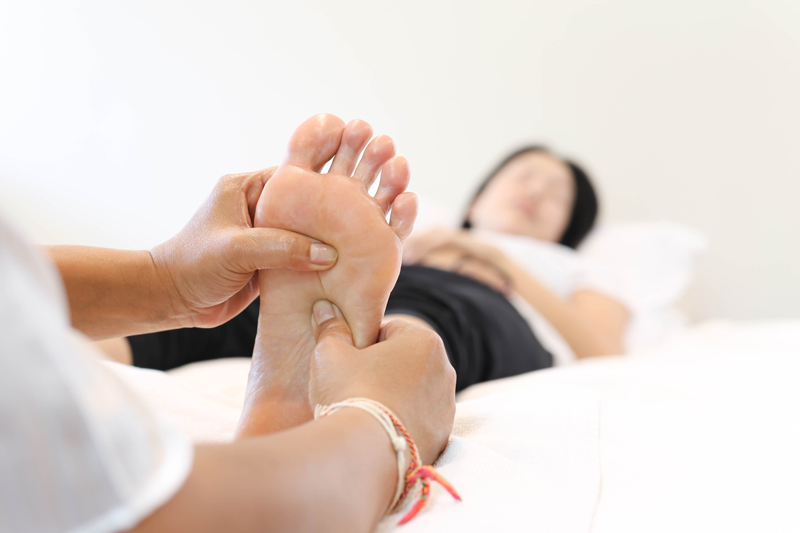
04 Mar Plantar Fasciitis Treatment with Chiropractic Care
Plantar fasciitis (fashee-EYE-tiss) is the most common cause of pain on the bottom of the heel affecting approximately 2 million patients per year. Plantar Fasciitis is a serious and painful condition that occurs when the long, flat ligament (plantar fascia) along the bottom of the foot develops tears and inflammation. Serious cases of plantar fasciitis can lead to ruptures in the ligament. The plantar fascia stretches from your five toes and runs along the bottom of your foot, attaching to your heel. As you walk or run, you land on your heel and raise yourself on your toes as you shift your weight to your other foot, causing all your weight to be held up by your plantar fascia. Such repetitive force can pull the fascia from its attachment on your heel and cause damage. Chiropractic adjustments of your feet and lifestyle modifications can help restore mobility, normal functionality, and eliminate your pain. Our Mile High Spine & Pain Center team in Broomfield, can educate you on your options, plan a course of treatment for your plantar fasciitis and improve your quality of life.
Treatment for Plantar Fasciitis
The American Academy of Orthopaedic Surgeons reports that nonsurgical management of plantar fasciitis is successful in approximately 90% of patients. Our patients in Westminster and Broomfield can enjoy non-invasive options like:
- Stretching instruction to show you ways to relieve tightness in the band
- Night splints and injections
- Custom inserts for your shoes for better arch support
- Chiropractic adjustments
Causes of Plantar Fasciitis
Suffering from heel or foot pain? You are not alone. Heel pain affects more than 50 percent of Americans with the most common cause being plantar fasciitis. Plantar fasciitis has a few different causes. It is often found in runners from the repetitive motion running requires. It can also occur from added pressure on the muscle from weight gain, pregnancy, or step aerobics. Repetitive motion and pressure can tear or damage the plantar fascia causing inflammation and pain. But, the good news is, there are simple treatment options to ease your pain.
Listen to Your Body
“Let pain be your guide” is a common catch phrase when it comes to the soft tissues of the body. When you start to feel pain it is the body’s way of telling you that you need to change something you are doing to avoid a more severe injury. Often, it means you need to slow down and ease up your efforts. Take at least a day off from whatever activity you are most involved in until your inflammation calms down. R.I.C.E. (rest, ice, compression, elevation) is a common treatment protocol for soft tissue issues. Light stretches prescribed by a member of our Mile High Spine & Pain Center team and anti-inflammatory medication can also be helpful.
Don’t Skip the Warm-up
Another way to ward off injury of the plantar fascia is to make sure you give your body ample time to warm up. Shoot for 20-30 minutes to get your muscles warm. After your muscles are warm is the best time to stretch and amp up your efforts. If you are coming off a plantar fasciitis episode, ease back into your activities. Warm up, but then slowly increase the amount of time that you are running or boosting your activity. Between distances–if you are a runner–you should take some time and stretch your calves, then continue.
Check Your Shoes
When your plantar fasciitis has calmed down, one of the first things you are going to want to do to ensure that it doesn’t reoccur is to consult a professional about your shoes. Without the right support for your needs, you are more prone to injury. A running store can usually evaluate how you run right there in their store. They will have you put on your shoes and run on a treadmill. Using a computer program, they are able to determine if you pronate your feet when you run, if you heel strike, and what your general running gait is. Once you are equipped with this information you can buy a shoe that has the right kind of support for your particular needs and help you prevent a future injury.
The American Academy of Orthopaedic Surgeons has reported that if you find a shoe that has adequate support and fits you properly you can avoid heel pain and most running-related injuries. It is also important to remember that shoes need to be replaced after about every 300 miles of use. If you are not sure if your shoes need to be replaced you can take them into a running store and they can look at the soles and let you know what they think. They can also tell by looking at the sole of your shoes where you are striking and where most of your weight is falling. These clues can help pick the right shoe for you.
Free Plantar Fasciitis Consultation
If you are suffering from plantar fasciitis, the team at Mile High Spine & Pain Center are ready to help. Mile High Spine & Pain Center provides specialized treatment plans for plantar fasciitis to patients in Westminster and Broomfield and can help you understand where your symptoms are coming from and what it will take to improve. Call (720) 507-0080 today to schedule your free consultation!